
Jawalamukhi
Destination Jawalamukhi
About City
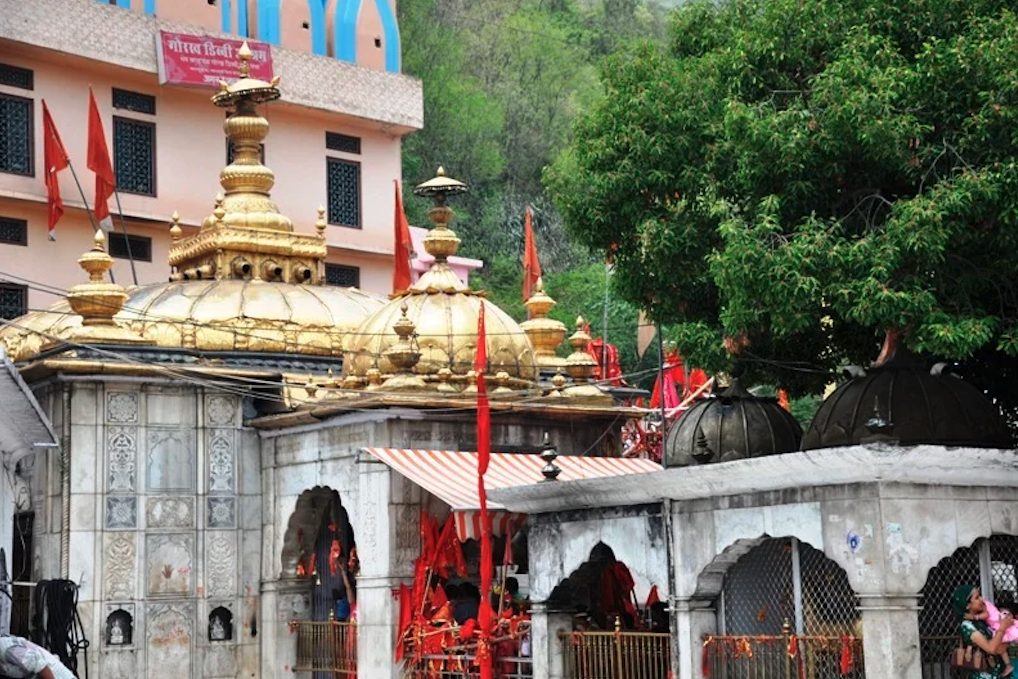
The Jawala Mukhi is famous for Devi Temple. It is one of the 51 Shakti Peethas of the country and dedicated to Goddess Jawalamukhi who is considered the deity of the ‘flaming mouth’. Legend has it that this is the place where Goddess Sati’s tongue fell on the Earth when Lord Vishnu cut apart her body with his Sudharshan Chakra. She is revered as Maa Durga who is manifested here as the flames that leap through the fissured rocks. A total of nine flames are ignited in the temple, which represent the nine Goddesses – Mahakali, Annapurna, Chandi, Hinglaj, Vidhya Basni, Mahalakshmi, Saraswati, Ambika and Anji Devi. A large number of devotees from all over India visit the temple during the year to worship these holy flames.
What Makes Jawalamukhi Special
Major pilgrimage destination
The Jawalamukhi Temple is regarded as one of the important Shakti Peetha sites and attracts pilgrims throughout the year.
Sacred natural flames
Unlike conventional temples, the main shrine does not have a traditional idol; the naturally occurring flames are worshipped as the manifestation of the Goddess.
Beautiful surroundings
Jawalamukhi lies amid the green Shivalik landscape, offering a peaceful setting for visitors.
Fairs and festivals
The town becomes particularly lively during Navratri, with fairs and large numbers of pilgrims. Himachal Tourism notes major celebrations around March–April and September–October.
Convenient access
Jawalamukhi is connected by road with Kangra, Dharamshala and other towns of Himachal Pradesh.
Access & Climate
Access and Distance
For New Hotel Beas View, Jawalamukhi, you can use the following. Distances are approximate and can vary slightly depending on the exact route.
- Kangra Airport (Gaggal): Approximately 45 km from Jawalamukhi. Kangra Airport is the nearest airport serving the Kangra region.
- Jawalamukhi Bus Stand – 500 mtr: Located within Jawalamukhi town, providing convenient bus connections to Kangra, Dharamshala, Hamirpur, Chandigarh and other nearby destinations.
- Jawalamukhi Road Railway Station: Approximately 20–25 km from Jawalamukhi town.
- Pathankot Railway Station: Approximately 90–100 km away and is an important broad-gauge railhead for travelling to the Kangra region. Himachal Tourism identifies Pathankot as the major broad-gauge railway station providing access to Himachal Pradesh.
Climate
Best Time to Visit: March to June or during Navratri festivals (when crowds and special pujas are at their peak). The area is accessible throughout the year.
- Summers (March to June): Temperatures often rise between 30°C and 38°C. Days are hot and sunny, making lightweight cotton clothes ideal.
- Monsoons (July to September): The region receives moderate to heavy rainfall, bringing lush greenery but high humidity.
- Winters (October to February): Temperatures drop significantly, with daytime highs around 15°C to 22°C and nighttime lows dipping to 5°C or lower. Woolen clothing is necessary during this period.
Places of Interest
Shri Jwalamukhi Mata Shaktipeeth
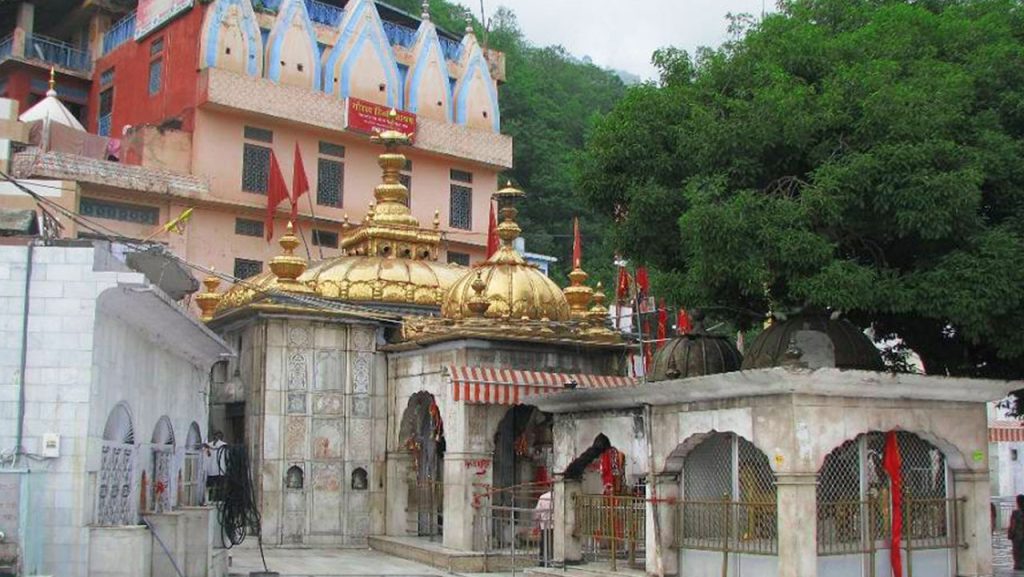
The famous Jawalamukhi Temple, known for its naturally occurring eternal flames.
Mata Baglamukhi Temple, Kangra
A prominent temple approximately 15 km from Jawalamukhi.
Shri Kalinath Kaleshwar Mahadev Temple
A revered Shiva temple approximately 10 km away.
Chamunda Devi Temple
A major pilgrimage destination in Kangra, around 45 km away.
Bajreshwari Devi Temple, Kangra
A prominent Shakti temple approximately 30 km from Jawalamukhi.
Pragpur Heritage Village
A historic heritage village offering a glimpse of traditional Himachali architecture and culture.
Gorakh Dibbi
This place is on the right side of the Jawalamukhi temple. Gorakh Nath Ji did penance here. The water of the kund keeps on boiling, yet the water is really cold. Here, on showing a burning lamp of incense in a small pond, a big light appears on the water. It is mentioned in the scriptures by the name of Rudra-kunda. Nagarjuna is said to have visited this place with Gorakh Nath Ji.
Radha-Krishna Temple
There is a Radha-Krishna temple near Gorakh Dibbi which dates back to the time of the Katoch kings.
Shiva-Shakti
This place is above Gorakh Dibbi by climbing some fifteen steps. Here there is a vision of Jyoti with Shivling, hence the name of this place is Shiva-Shakti.
Sid Nagarjuna
This place is above Shiva-Shakti by climbing about a furlong of steps. There are two pagodas on its way, and here there is a stone statue some one and a half cubits high. This is called Sid Nagarjuna. There is a famous anecdote that when Guru Gorakh Nath Ji went to bring khichdi and did not return even after a long time, Nagarjuna climbed the hill to see where Guru Ji had gone. After coming there, he could not find Guru Ji; in the end he found this place to be very picturesque and sat here meditating.
Ten-fifteen years back, the travellers used to feel a lot of trouble to climb here, but now the stairs are made from the industry of the officials here, it does not seem that much trouble.
Ambikeshwar
This place is near Nagarjuna, and is the Manmatt Bhairav, famous as Ambikeshwar.
Ashtadashbhuji Devi
This place is also very ancient; it is at a distance of one mile towards the west from the temple of Bhagwati Jawalamukhi. There is a huge pond here in which it is said that by bathing, Phulbahari (white leprosy) is cured. There is also a crematorium here.
Teda Mandir
This temple is located about 2 km from the main temple and is dedicated to Lord Ram.
Bhairav Nath Mandir
This temple is located in a beautiful forest about 1 km from the main temple.
Temple Distances & Timings
Distance from Mata Jawalamukhi Temple
- Mata Baglamukhi Temple – 15 km
- Kaleshwar Mahadev Temple – 10 km
- Panch Thirthi Temple – 10 km
- Ram Temple (Teda Mandir) – 2 km
- Ashtbhuja Temple – 2 km
- Bajreshwari Devi Temple Kangra – 30 km
- Chamunda Devi Temple – 45 km
- Mata Chintpurni Temple – 35 km
- Brijeshwari Devi Temple in Kangra, 35 km from Jwalaji.
- Chamunda Devi Temple, 60 km from Jwalaji.
- Shiva Temple at Baijnath, 85 km from Jwalaji.
- Chintpurni Devi Temple in Una, 35 km from Jwalaji.
Plan a visit to Jawalamukhi and see these beautiful temples, which represent the rich heritage of Himachal Pradesh.
Temple Timings (subject to change)
Opening Hours: Generally, 5:00 AM to 10:00 PM (may vary slightly by season).
Aarti Timings (approximate; confirm on-site or via official sources):
- Mangal Aarti: 5:00–6:00 AM (summer) / 6:00–7:00 AM (winter)
- Bhog Aarti: Around 11:30 AM–12:30 PM
- Evening Aarti: 7:00–8:00 PM
- Shaiyan Aarti: Around 10:00 PM
The temple remains open year-round, and the weather in the region is usually pleasant.
Significance & History
Jawalamukhi, also known as Jawala Ji, is an ancient temple town in Kangra district, Himachal Pradesh. It is famous for the naturally burning flames (jyotis) that emerge from fissures in the rock inside the temple. The temple is regarded as one of the important Shakti Peethas.
According to Hindu tradition, after Goddess Sati sacrificed herself at the yajna of her father Daksha, Lord Shiva carried her body. Lord Vishnu is said to have divided Sati's body with the Sudarshan Chakra, and different parts fell at various places, creating the Shakti Peethas. At Jawalamukhi, Sati's tongue is traditionally believed to have fallen, and the Goddess is worshipped here in the form of sacred flames rather than a conventional idol.
A local tradition says that Raja Bhumi Chand learned about a mysterious flame after reports from his shepherds and subsequently built a shrine at the sacred site. The priestly worship tradition was entrusted to Bhojak Brahmins, whose descendants are said to have continued the service at the temple.
Jwalamukhi has been associated with historical accounts from the medieval period. The Himachal Pradesh government's temple history notes that Tarikh-e-Firozshahi mentions a library associated with the temple containing about 1,300 books. The temple is also mentioned in connection with Jahangir's visit after the Mughal conquest of Kangra in 1620.
The temple's present appearance also reflects the Sikh-era history of the region. Maharaja Ranjit Singh contributed to the temple, including the gilding of its dome. Himachal Tourism describes the dome as having been gilded under his patronage.
Unlike most Hindu temples, the principal object of worship is not a traditional statue. Devotees worship the natural flames emerging from the rock. The flames are traditionally understood as manifestations of the Goddess; scientifically, they are associated with naturally occurring combustible gases emerging through geological fissures.
In short: Jawalamukhi's history combines ancient Hindu mythology, centuries of pilgrimage, medieval historical references, and the distinctive natural phenomenon of continuously burning flames, making it one of Kangra's most important religious and cultural landmarks.
Address : At Chambapatan Chowk, NH-88, Shimla - Kangra Rd, Near Police Station, Jawalamukhi, Himachal Pradesh 176031
Address : Bungalow No.1, B K, N. College Road, Rai Ka Bagh, Jodhpur, Rajasthan 342001
Phone : 945913889282194185278894058367
Email : [email protected] [email protected]
Copyright© L'AGE HOSPITALITE All right reserved.